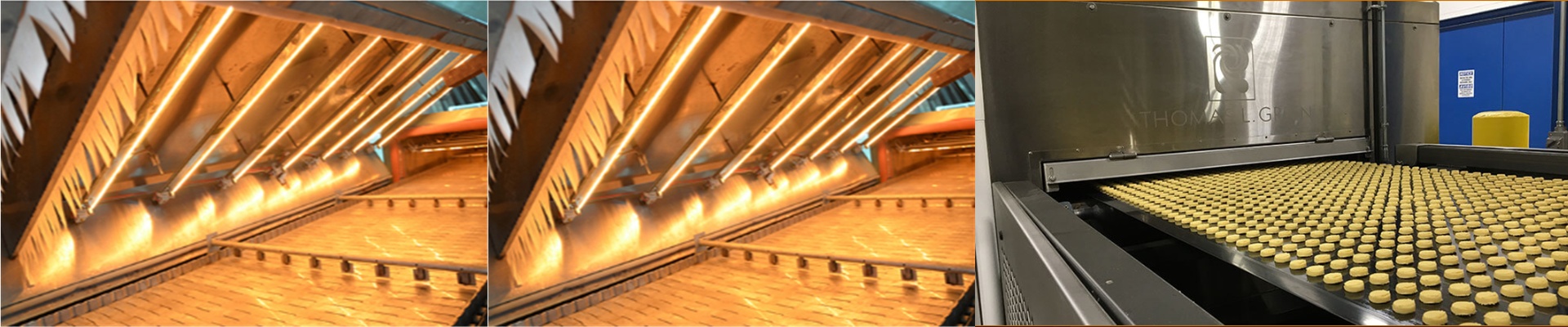
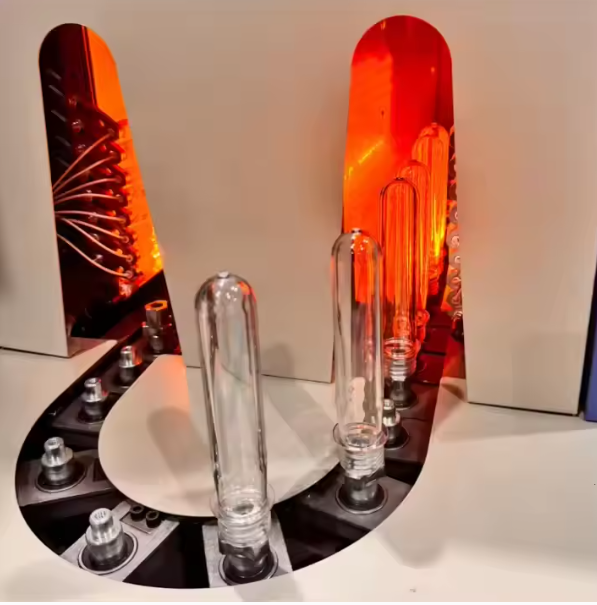
On a fast-moving Sidel or Krones blow molder, the heating tunnel is where the pressure hits first. One emitter goes down, the line stops, preforms cool off, and you lose output. Standard heaters have a habit of cracking, losing output, or shorting at the terminals. We built our Teflon-wire infrared heaters to fix those weak spots and give you repeatable performance, day after day.
What actually matters on the spec sheet
We run high-purity quartz tubes with tungsten filaments, tuned for short-wave infrared so you get fast response and tight temperature control. Inside, the wiring is Teflon-insulated for high dielectric strength and heat resistance, so the connections stay solid even when that tunnel is running 400–500°C. Each unit is built to OEM-fit dimensions—length, diameter, and the R7s connector interface—so it drops straight into Sidel, Krones, SIPA, Husky, SACMI, and Nissei ASB machines without any modification. Power and voltage are selected to match your blow molder’s original spec, so the heating curve and cycle timing stay the same.
Why this plays well in real production
On the floor, that translates to quicker recovery after a jam and fewer temperature dips across the preform wall. Lines that were bleeding 1–2% yield to heat drift can claw that margin back. Energy use comes down because the emitter hits setpoint fast and holds it with stable output. Field data puts typical lamp life at 5,000+ hours with less than 5% output drop, which cuts planned replacements by roughly half compared with standard halogen emitters. One plant running three lines saw annual energy savings of 8–12% after the switch, and unplanned heating-related stops dropped by 30%.
The practical details you can’t skip
Teflon-insulated infrared heaters handle thermal cycling better, but they still need clean, aligned mounting to avoid hot spots. Check the socket condition and reflector alignment before you install—any arcing from a worn socket will shorten any emitter life. Also, match wavelength and power density to your preform wall thickness. Too much intensity scorches thin walls; too little drags the cycle out. Get those details right, and the swap is straightforward—payback comes fast.