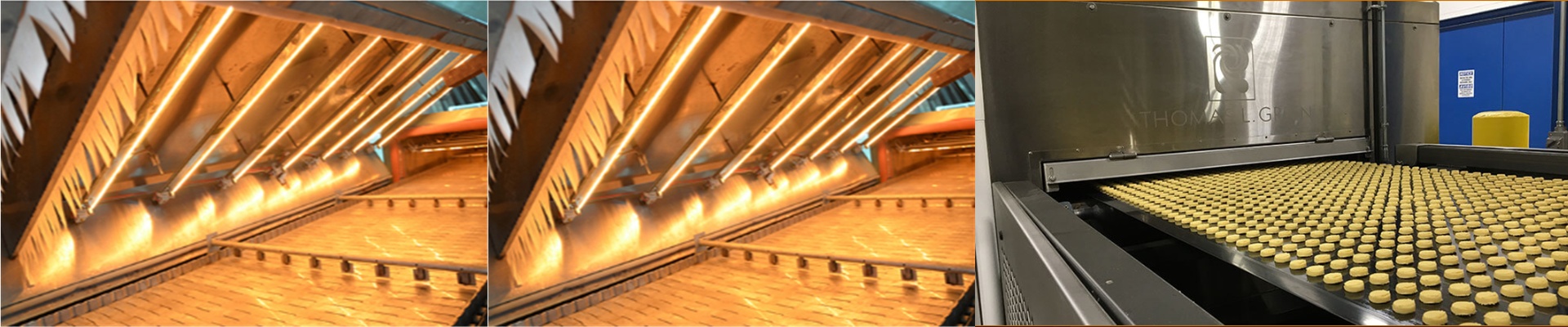

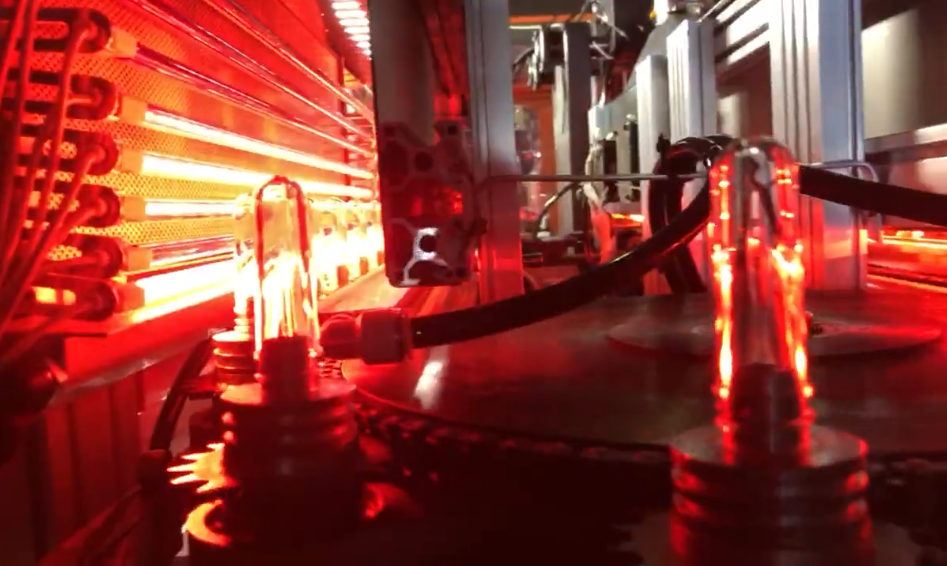
Out on the line, the SACMI blower is humming along, and the heating tunnel is doing its job—getting every PET preform to the right stretch temperature. Then the lamp starts to wander. Output dips. You’re suddenly chasing rejects: weak blows, uneven wall thickness, and that all-too-familiar bottle-to-bottle variability that shows up on the QC sheet. Downtime is the real hit. Not just the minutes lost swapping a lamp, but the extra time spent re-tuning heat profiles afterward. Swap in an emitter that doesn’t match the original geometry and spectral output, and you’re balancing heat across zones instead of running parts. We built our SACMI replacement lamps to drop in as the engineered component they were meant to be—same mounting, same electrical interface, and the same heating behavior your blow molder was designed around.
What actually matters, technically
We supply infrared emitters engineered to match the OEM heating requirements of SACMI stretch blow molding lines. In practice, that means you get the right lamp for the right tunnel: geometry that fits, output you can count on, and a connector interface that lines up with the socket already in the machine. On a running machine, these are the spec points that make the difference:
- **Emitter type:**Short-wave infrared halogen lamps, chosen for fast response and stable output during preform heating cycles.
- **Power and voltage:**Rated to match the SACMI heating zone design—so you don’t have to re-calculate current, rewire, or chase under/over-heating.
- **Physical fit:**Tube length, diameter, and mounting end-fittings matched to the OEM footprint so the lamp sits in the reflector path exactly where it should.
- **Connector compatibility:**Standard connector types (commonly R7s in many SACMI heating modules) to allow a quick swap without modifying terminals.
- **Spectral behavior:**Peak output tuned to heat PET preforms efficiently, supporting consistent material softening across the preform wall. This isn’t about “more power.” It’s about predictable heat delivery—so the temperature control loops can do the job they were designed to do.
Why this plays well on a SACMI line
A SACMI blower line is a tightly matched system: preform conveyor, heating tunnel, reflectors, and blow station are all calibrated around a specific heating profile. Change the lamp, and the profile shifts—even if the machine still starts. Our replacements are built to keep that match intact. **You recover faster after a swap.**Because the lamp geometry and output match the OEM configuration, you spend less time re-tuning zone temperatures—and less time scrapping bottles during restart. **You get stable heating, which means consistent blowing.**PET stretch blow molding is sensitive to temperature uniformity. When emitter output stays stable across the life of the lamp, preform stretch is tighter—fewer thin spots, fewer stress lines, fewer rejects. **You get fewer lamp-related stops.**In production, premature lamp failure shows up as sudden setpoint drift, alarms, and unplanned changeovers. These lamps are built to meet expected service life targets, so you run longer between planned maintenance windows. **You get energy discipline you can measure.**Infrared heating is efficient when the emitter is matched to the load. A correctly matched lamp keeps energy use aligned with the heating task—no excess draw, no wasted heat. **You get a cost picture you can plan around.**Replacement cost isn’t just the lamp price. It’s labor, downtime, and scrap. A matched replacement cuts the hidden cost of “close enough” parts.
Practical stuff you’ll run into on the floor
Installation is straightforward, but the details matter.
- **Match the lamp to the machine, not just the length.**Confirm the exact SACMI heating module and the original lamp rating. Two lamps can be the same length and still differ in wattage, base type, and output curve—those differences throw off your heating balance.
- **Handle with clean, dry gloves.**Oils and residues on the quartz tube create hot spots and shorten lamp life.
- **Check the reflector condition.**A worn or oxidized reflector changes heat distribution even with a new lamp. If you’re replacing lamps frequently, inspect the reflector and its alignment.
- **Verify the socket and wiring.**Over time, terminals oxidize and connectors loosen. Clean contacts and confirm secure connections to avoid voltage drop and unstable output.
- **Expect a recalibration step after replacement.**Even with matched parts, thermal equilibrium shifts a bit. Run a controlled warm-up and confirm zone setpoints against your standard start-up procedure. If your SACMI line is running on aging lamps, the first practical move is to swap in a replacement engineered to the original spec—then get the tunnel back to the stable profile the machine was built to deliver. We supply SACMI blower line replacement lamps built for the realities of the plant floor: correct fit, correct output, and repeatable performance—so the heating tunnel stops being a variable and becomes a predictable part of the process again.