

A cold night in an RV isn’t just uncomfortable—it’s a strain. When the cabin cools, the body tenses up, blood vessels constrict, and the steady warmth that supports circulation falls away. For older travelers, that dip can mean stiff joints, restless sleep, and extra load on the cardiovascular system. Forced-air heaters blast hot air that rises, leaving floors chilly and the air dry, while the on-off swings can leave you feeling unsettled.
What matters, technically
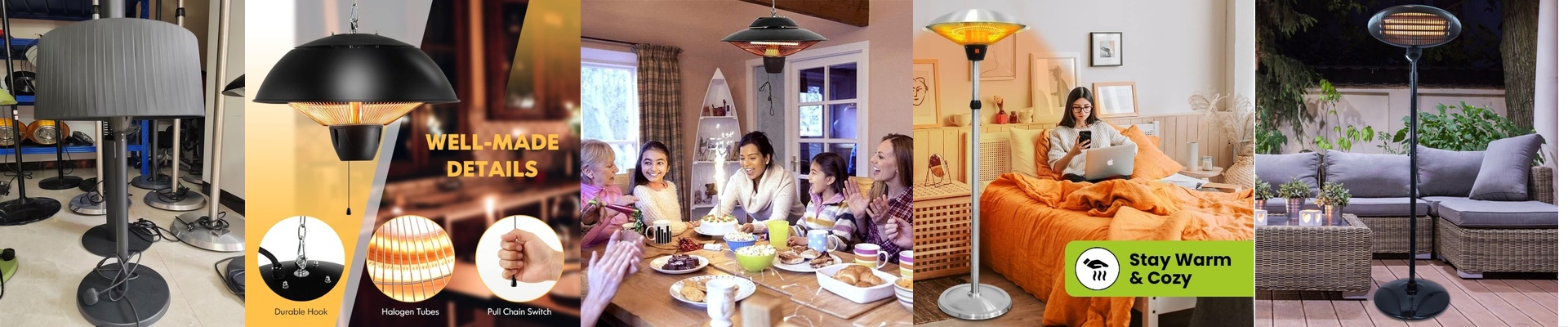
An RV electric infrared heater delivers radiant warmth that feels like sunlight on your skin—without the glare. Inside, a carbon fiber or quartz element heats quickly and emits medium-wave infrared that penetrates the surface of the body, helping muscles relax and keeping peripheral circulation steady. The result is a gentle, even warmth that feels more natural than a blast of hot air. A built-in thermostat holds the room at the set point, so you avoid the jolts that disrupt sleep. For safety, tip-over protection shuts the unit off if it gets knocked over, and overheat protection adds peace of mind. Most models run on standard 120V outlets, draw between 750W and 1500W, and are compact enough to sit on a counter or mount under a cabinet.
Why it fits the RV life
Space is tight in an RV, and insulation varies, so comfort has to be targeted and predictable. Infrared warmth stays where you need it—at floor level and around the body—so you feel cozy faster, without waiting for the whole air volume to heat up. That steady, low-glare heat helps older travelers keep circulation relaxed, which can ease nighttime stiffness and support calmer sleep. You also avoid the drafts and dry air that come with forced-air systems, so eyes and throat stay comfortable.
The things you actually need to know
Infrared heat is directional, so position the heater where it can reach the main seating or sleeping area. It warms people and surfaces directly, rather than heating the air, so pairing it with a small fan can help distribute warmth in larger layouts. Check the available power on your RV circuit, and if you run multiple appliances, consider a unit with a lower wattage option. Always plug into a grounded outlet and keep the heater clear of bedding and curtains.