

Cold floors and drafty desks aren’t just uncomfortable—they drag down focus, slow work, and make winter colds more likely. In an office, steady warmth isn’t a perk. It’s a basic working condition.
What matters, technically
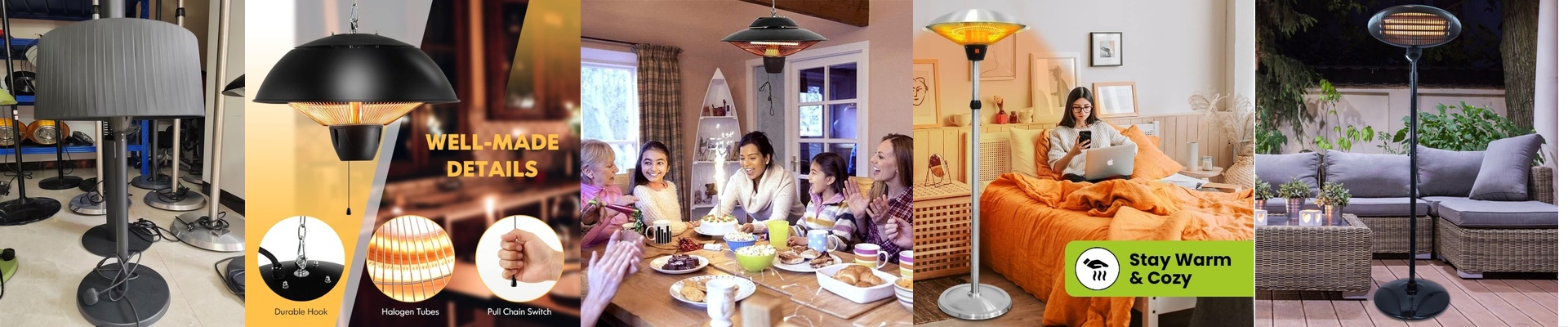
Infrared heaters warm people and surfaces directly, instead of moving air around. In a typical office, a compact quartz infrared heater puts out 1,500–2,000W of radiant heat, so warmth hits desks, hands, and feet fast. The quartz tube comes up to temperature quickly and holds steady, and most models include a built-in thermostat to keep comfort consistent. For safety, look for tip-over protection and overheat protection. In covered outdoor break areas, an IP-rated electric outdoor heater keeps the space usable without fuss.
Why this approach fits
With radiant warmth, people feel comfortable the moment they sit down—no waiting for the room to “warm up.” That matters because comfort supports office health and steady output. When the body isn’t fighting the chill, circulation improves and muscles stay relaxed, which helps with typing, meetings, and collaboration without distraction. A steady, draft-free heat profile also reduces the temperature swings that can stress immune systems, which helps lower the chances of winter colds spreading. The payoff is fewer interruptions and fewer last-minute coverage gaps.
What to keep in mind
Infrared heat does its best when it reaches the people who need it. Position the unit so it has a clear line of sight to workstations, and keep clearances clear of papers and curtains. For best results, pair the heater with solid insulation and manage humidity to prevent condensation on cold surfaces. And here’s the thing: infrared feels immediate, but it doesn’t “heat the air” the way forced-air systems do. In very open spaces, you may need multiple units or a mix of heating approaches.