
On the shop floor, that semi-automatic blow molder is always waiting on the heat. Preforms either come up short on temperature or you get neck scorch. Either way, you’re wasting material, chasing inconsistent bottles, and never hitting the cycle speed the machine is capable of. The heating lamp is the bottleneck, and it needs a proper engineering fix, not a band-aid.
What matters, technically
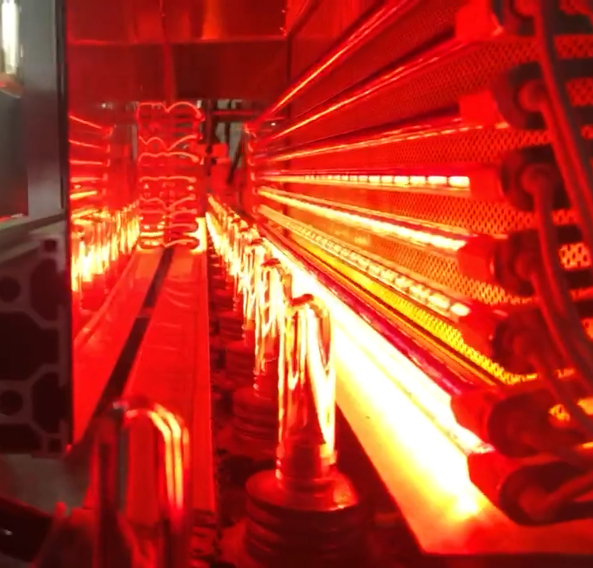
We build the heater lamp for semi-automatic blowing around short-wave infrared quartz emitters, tuned specifically for PET preform heating. The standard voltage range is 240–480 V, and the power density is matched to the heating tunnel length and the bottle weight. You can spec 1.5 kW, 2.0 kW, or 3.0 kW per lamp, sized to deliver fast, even heating without pushing you past the crystalline temperature window. Emitter length and mounting are dimensioned to retrofit common semi-automatics, using R7s connectors and standard ceramic holders. Response is immediate—full output in seconds—so you can stabilize the heating profile without waiting around for a long thermal ramp.
Why this works in practice
On a semi-automatic stretch blow molder, the operator sets the timing, the heater zones, and the pressure. If lamp output drifts, the process drifts with it. These lamps hold tight output tolerance across the preform body, so you get repeatable wall thickness, consistent biaxial stretch, and fewer pinholes. Energy use drops because the quartz emitter puts most of the input into radiant heat, and the fast start cuts idle power waste. When it’s time to replace one, it’s a direct swap—keeps downtime short and gets your semi-automatic line back in production.
The details that bite you
Mounting alignment matters. If the emitter is off-center, you’ll see hot and cold bands. Confirm holder spacing, lamp length, and focal distance to the preform path. Keep reflectors clean and intact—pitting kills output and throws off the profile. Peak wavelength shifts with emitter temperature, so match lamp wattage to preform wall thickness and cycle time. If you run 24/7, keep a spare on the bench. Even the best quartz emitter is a consumable, and a quick swap beats troubleshooting in the middle of a run.