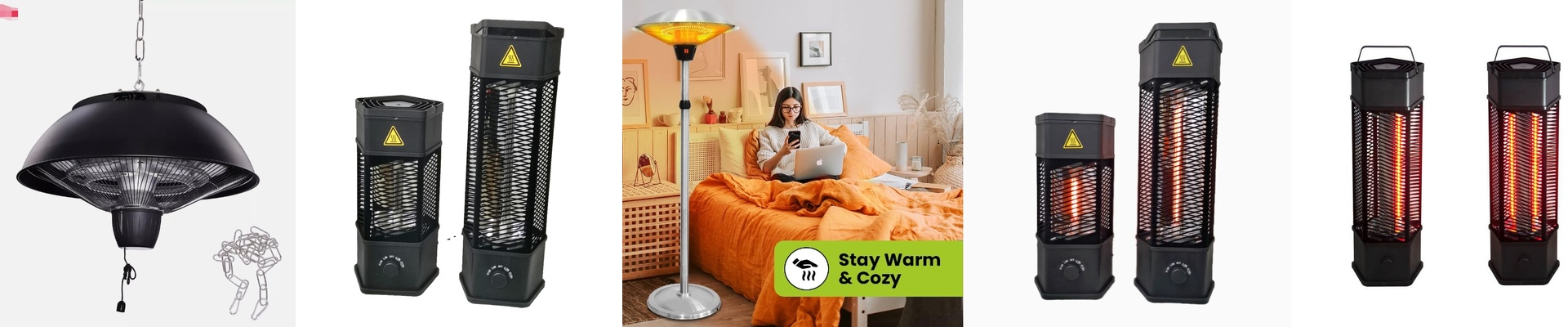
Why Most Coop Heaters Fail (And How We Fixed Ours)
Let’s be honest: chicken coops are absolute nightmares for electronics. You’ve got ammonia eating away at everything, dust everywhere, and humidity that feels like a sauna. If you use a standard infrared lamp, it’s usually just a matter of time before it burns out or pops. We got tired of seeing that happen, so we built a heater that actually survives the environment. The battle against moisture Here is the problem: water and hot quartz tubes don’t get along. When a stray drop of condensation hits a scorching hot element, the glass can just crack from the shock. It’s a quick way to lose your heat in the middle of a cold snap. To stop this, we wrapped the element in a sealed, splash-proof housing. It keeps the water off the glass. But we didn’t stop there. We added an anti-fog coating to the outer lens. Why? Because if that lens fogs up, the heat just bounces off the moisture instead of reaching your birds. The coating keeps things clear, so the warmth actually goes where it’s supposed to. Stopping the “creep” Most “waterproof” heaters have a fatal flaw: the wiring. Moisture loves to creep into the electrical terminals, causing corrosion or a nasty short circuit. We spent a lot of time on the seals. We used reinforced gaskets to lock out the damp air and dust. It keeps the internals clean and dry, which means the lamp doesn’t pit or fail prematurely. It just keeps humming along. The trade-off Now, there is one thing you should know. Because we put a protective layer between the heat and the birds, you lose a tiny bit of that raw, “naked bulb” intensity. It’s a small price to pay for a heater that doesn’t die every few months, but you do need to plan for it. When you’re picking your wattage, just keep in mind you might want to hang the units a bit lower or add an extra lamp to the mix to get the exact warmth you’re looking for. Once they’re wired up, though? These things can take a beating and they don’t quit.