
Introduction
If you run a SIPA rotary machine, you know the truth: consistent heat isn’t a “nice-to-have.” It’s the whole game. That’s why we built the Sidel SBO heater lamps to deliver 100% power matching. These infrared units are designed to kill the temperature swings that cause bottle defects and sudden line stoppages. The feeling you get? Relief. Pure and simple.
The Power, Voltage, and Size—Made Simple
Here’s the thing about these lamps: they run on 400V, not 230V, and it’s not just for show. That choice keeps the current lower while still hitting the wattage you need. Lower current means less voltage drop across long wiring runs, and it means the terminals stay cooler. So when the machine is cycling fast, the power stays steady. And the wattage? It’s matched to the exact needs of each SBO zone. For example, a 2500W rating gives you the heat density to hit PET preform temperature targets within the short window of a rotary turret. As for size, the length is set to fit the heater reflector—usually around 300mm. That way, the lamp sits right in the focal point, without shadows or cold spots at the ends.
What’s Inside: Halogen, Coating, and the Right Connector
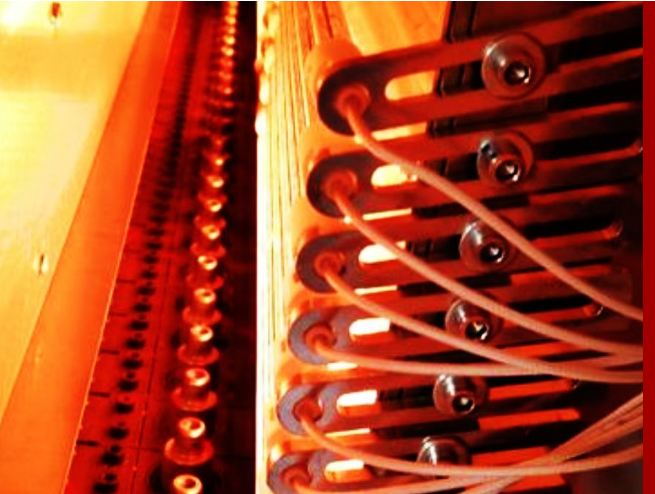
We use halogen quartz tubes because they keep their output even as the element ages. The halogen cycle keeps the filament clean, so the lamp holds its rated wattage longer than standard IR tubes. Plus, there’s a reflective coating on the quartz that redirects wasted downward radiation back onto the preform. More energy goes where it matters—onto the target—instead of heating up the machine frame. And the connector? It’s R7s: a bi-pin, high-temperature ceramic interface built for industrial heater duty. It stays tight through thermal cycling, and it drops right in so you can align the lamp quickly in the reflector cradle. Changeover becomes fast. No fuss.
Real-World Performance on SIPA Rotary Systems
On a SIPA rotary, the lamp has to deliver repeatable heat with every single rotation. When you have 100% power matching, the mismatch disappears—no more over-heating at some stations and under-heating at others. What that gives you is tighter temperature control across the whole turret. Now, a reality check: high-wattage infrared lamps put out a lot of local heat. So keep your machine’s cooling and airflow exactly as specified. Keep reflectors clean, and during preventive maintenance, check the terminal torque on the R7s pins. Do that, and you’ll cut heating drift, reduce scrap, and keep the line running at speed.