
Why We Put Every Bathroom Infrared Heater Through the Wringer
We make waterproof infrared heaters for pergolas, but the real work happens long before a single unit ships. Because you need a heater that can handle rain, humidity, and those wild temperature swings that come with being outdoors. So we put every single unit through a serious hygrothermal aging test. This isn’t just a checkbox. It’s a core part of how we make sure the design actually holds up.
The Nitty-Gritty: Power, Voltage, and Fit
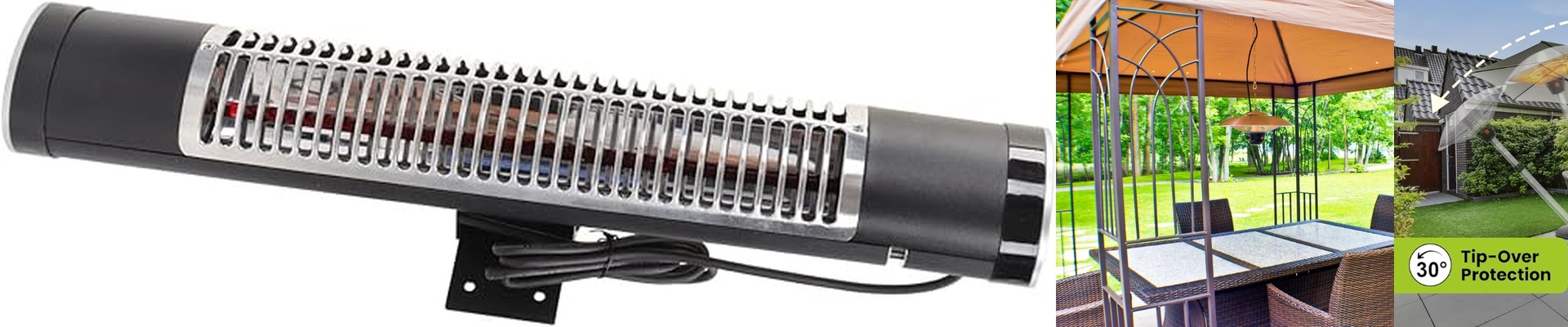
These heaters are built to pack a lot of warmth into a small space. We tune the voltage and wattage so you get that instant, radiant heat without needing a complicated electrical setup. The tube length is chosen to match standard pergola mounting points, while still giving you the right surface area for the output you want. The result? A high-output heater that’s straightforward to plan and install.
Built to Last: Quartz, Halogen, and Smart Connectors
We use a quartz envelope because it can handle sudden temperature changes and high heat without breaking a sweat. The halogen element keeps performance steady over time, so you don’t get that frustrating drop in output you see with cheaper filaments. And the waterproof build? It’s sealed tight to keep moisture out, which means no corrosion and no electrical issues. The connector is practical, too. It’s designed for quick wiring and a solid mechanical hold, so the unit stays put even when the weather turns ugly.
Real Outdoor Comfort, Without the Headache
In a pergola, a heater needs to turn on fast and keep running, season after season. The waterproof design and the validated aging performance mean fewer failures out in the field—and fewer callbacks for you. There is a trade-off, though. High heat density means you need to think about thermal management around the mounting area. Give it enough clearance and ventilation, and you’ll get steady infrared warmth from a heater you can count on.