
Getting that Perfect Golden Brown: Why We Use 800W Infrared
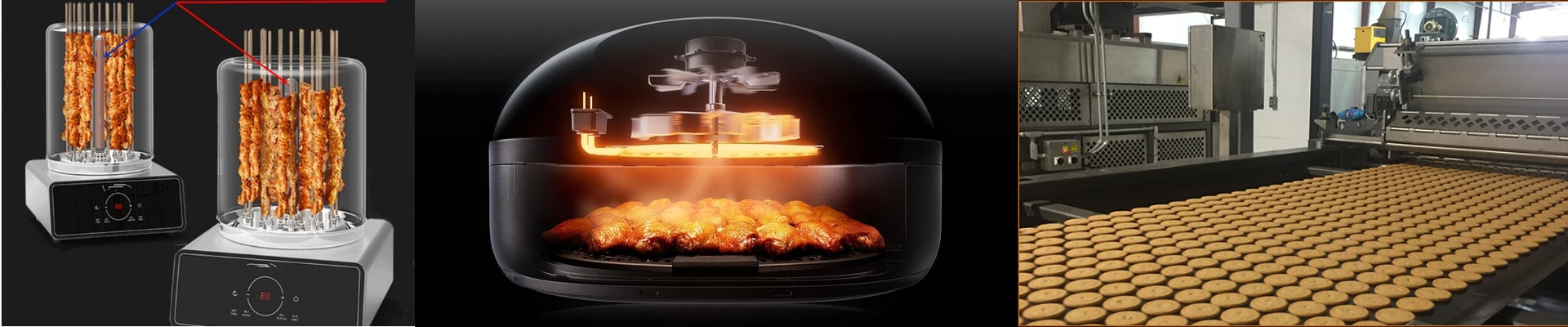
If you’ve ever pulled a loaf out of the oven and felt that disappointment because the crust looked pale—even though the inside was done—you know the struggle. Getting that deep, caramelized color (the Maillard reaction, for the science nerds) takes more than just hot air. You need a sudden, intense hit of energy. You want to sear the surface quickly so you don’t dry out the fluffy center of the bread. That’s why we put 800W shortwave infrared heaters in our rotary ovens.
Why 800W? Why shortwave?
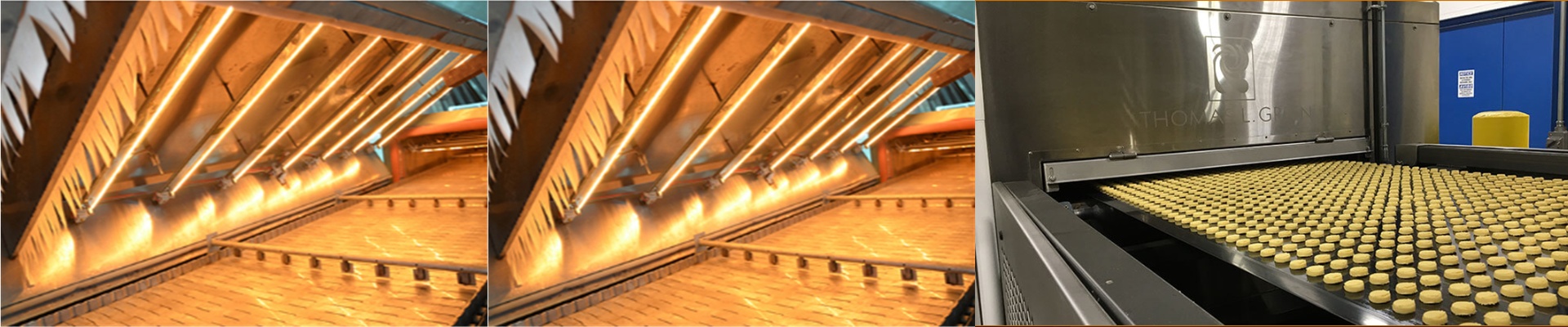
Here’s the thing: standard convection is just too slow. Moving air is great for baking, but it’s not great for that final “pop” of color. Our 800W lamps work differently. They send out shortwave radiation that hits the dough almost instantly. It’s like a flash of heat. Because these lamps react so fast, we can flick them on and off as the bread rotates. No more worrying about those annoying burnt spots on one side of the loaf.
Built for the grind
These aren’t your average lightbulbs. We use high-purity quartz glass because these things go through a brutal cycle of heating up and cooling down every single minute. And since rotary ovens are always moving, things shake. A lot. We’ve spec’d the wiring and connectors to handle that industrial vibration. We use reinforced terminations so the lamps don’t just rattle loose or burn out at the connection points right when you’re in the middle of a huge bake.
A word of caution
Now, this kind of heat is a powerful tool, but it isn’t magic. You can’t just set it and forget it. Since the heat hits the surface so hard, you have to get your rotation speed exactly right. If the bread lingers under that beam for too long? You’ll char the crust before the middle even thinks it’s cooked. That’s why a solid PID controller is a must. You need something that can switch the heat on and off second-by-second. That’s the only way to make sure every single loaf in the batch looks exactly the same.